The Ultimate Home Theatre Buyer's Guide: How to Choose the Best Gear
You've been thinking about building a home theatre, and you already know one thing: the options are overwhelming. Projectors or TVs? Dolby Atmos or standard surround sound? Dedicated room or media room? The choices stack up fast.
At Quantum AV, we've been designing and installing home theatre systems in Naples and throughout Southwest Florida since 2002. We've built everything from cosy media rooms to full cinema-grade screening rooms in luxury waterfront estates. This guide breaks down everything you need to know - so you can make smart decisions before spending a dollar.
Dedicated Home Theatre vs Media Room: Know the Difference
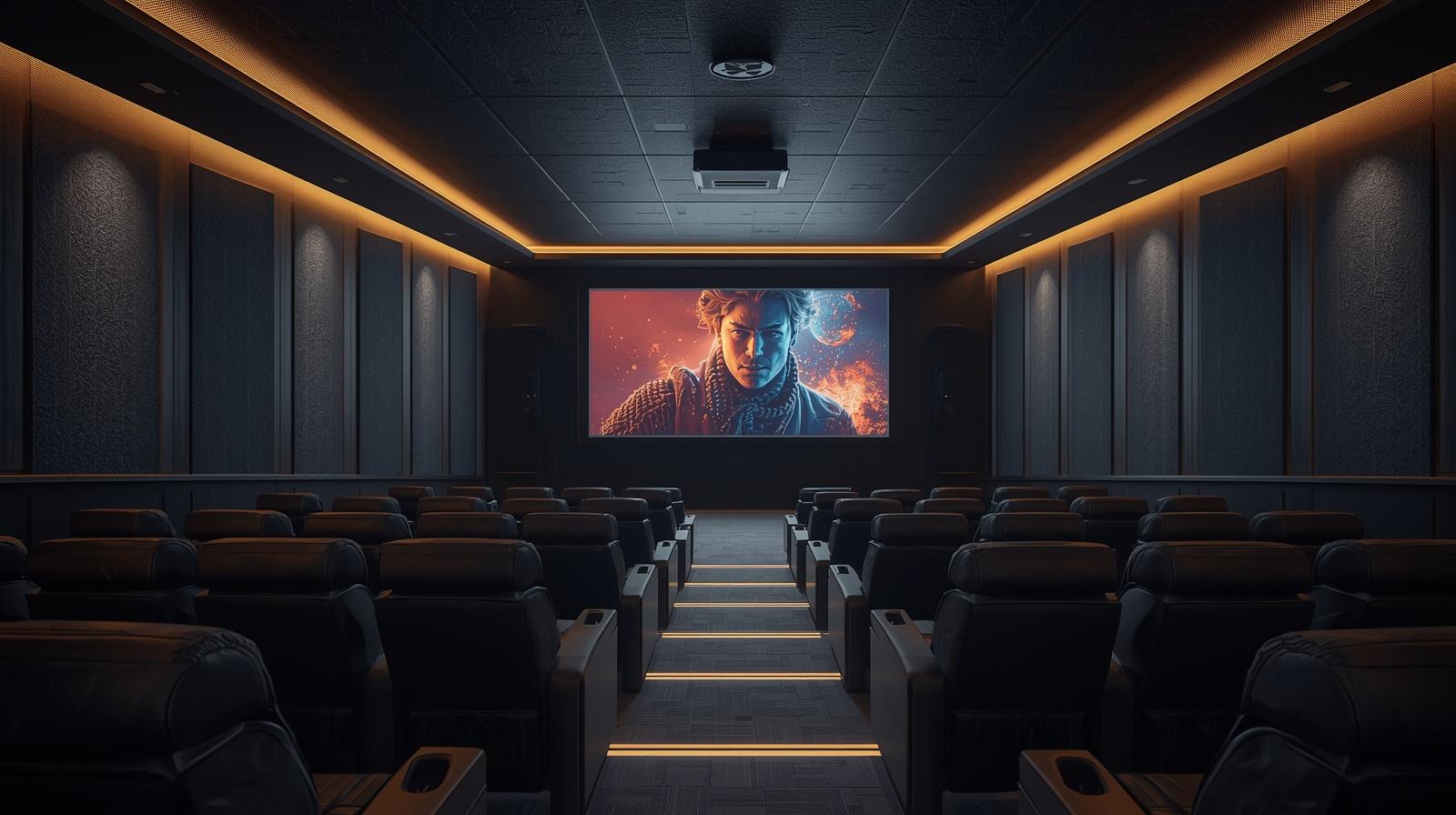
The first decision is also the most important. A dedicated home theatre is a purpose-built space — usually a lightproof room designed exclusively for watching films. You control every acoustic and visual element from the ground up.
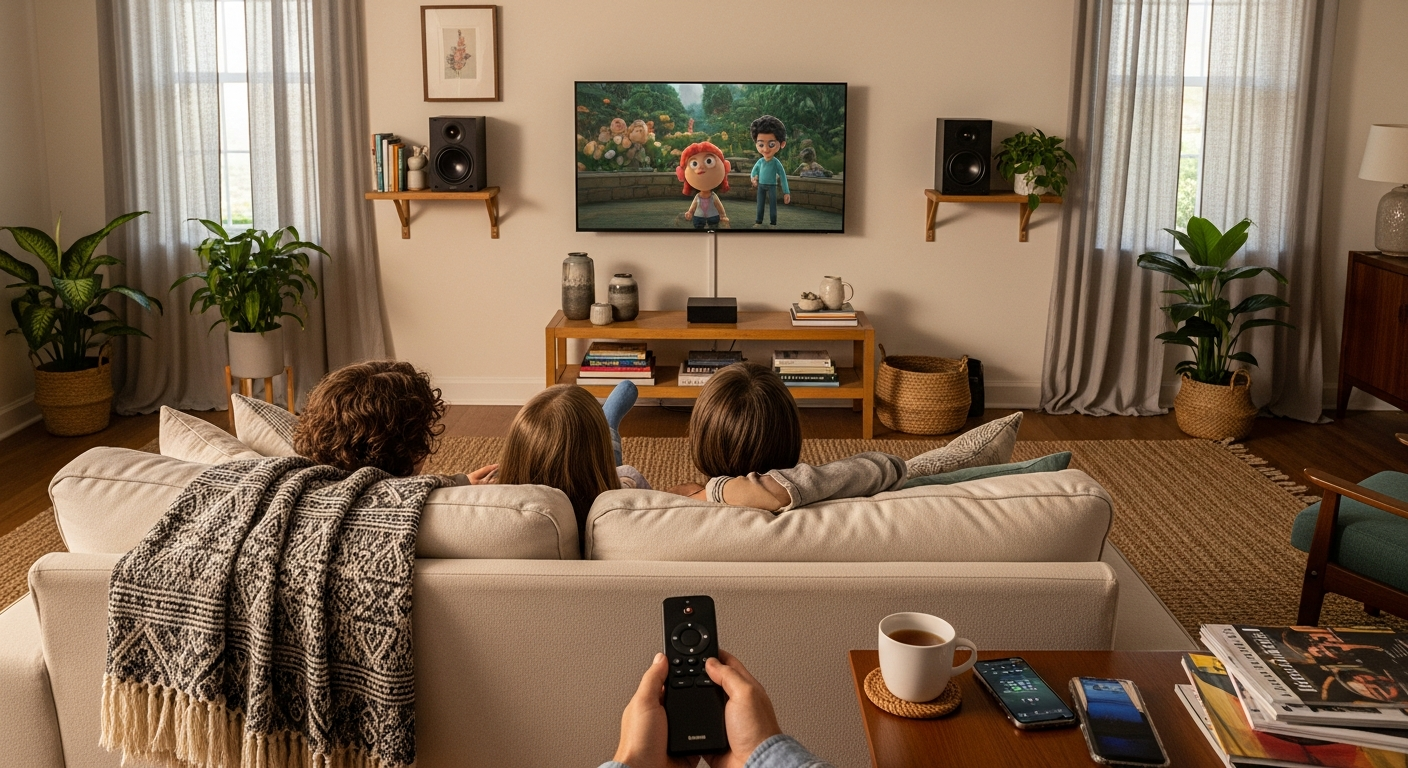
A media room is more flexible. It's where families watch sports, play games, stream TV, and occasionally catch a movie. It shares space with other activities and uses more versatile gear.
Neither is wrong. The right choice depends on how you use the space and what kind of experience you're after. We help our clients think through this during a free consultation — because the answer shapes every gear decision that follows.
Choosing Your Display: Projector or TV?
This is the question we hear most often, and the honest answer is: it depends on your room.
Projectors are the gold standard for a true cinematic experience. We install 4K and 8K projection systems from Sony, JVC, and Epson — brands we're authorised dealers for — that deliver screen sizes of 100 inches and beyond with stunning image depth. If you have a dedicated, light-controlled room, a projector is almost always the right call.
Large-format TVs are a better fit for media rooms with ambient light. Today's OLED and QLED panels deliver jaw-dropping contrast and colour accuracy, and they work well in rooms that also serve everyday purposes.
Key specs to understand before you shop:
Resolution: 4K is the current benchmark. 8K is available and increasingly relevant for larger screens.
HDR: Look for HDR10+ or Dolby Vision support for the widest colour range and brightness.
Contrast ratio: Critical for picture depth - especially in dark rooms.
Throw distance: For projectors, your room dimensions directly affect which model will work.
We handle display calibration after every installation. An uncalibrated projector or TV - even a premium one — doesn't perform at its full potential.
Audio: Where the Real Experience Lives
Most people focus on video first. Our experience tells us audio is where a home theatre truly earns its name.
The goal is immersive, three-dimensional sound that puts you inside the scene. Dolby Atmos is the current standard for that experience. It uses height channels - speakers mounted in the ceiling or angled upward - to add a vertical dimension that standard 5.1 surround sound can't replicate.
Here's a basic breakdown of common audio configurations:
- 5.1: Five speakers plus a subwoofer. Front left, centre, front right, rear left, rear right. Solid entry-level surround.
- 7.1: Adds two more surround channels for greater spatial depth.
- 7.1.4 Atmos: Seven traditional speakers, one subwoofer, four overhead channels. Full three-dimensional audio.
- 9.1.6 and beyond: Reserved for dedicated rooms where acoustic engineering is part of the design.
Speaker placement matters as much as speaker quality. A great speaker in the wrong position performs worse than an average speaker in the right one. Our installations include precise placement and professional calibration — not just gear on a shelf.
We work with premium audio brands, including Sonos and Monitor Audio, and we integrate audio seamlessly with Control4 automation so everything operates from one interface.
Room Acoustics: The Part Most People Skip
Room acoustics are often the last thing buyers think about and the first thing that makes or breaks a system.
Hard surfaces - bare walls, tile floors, glass — reflect sound and create flutter echo. Soft materials absorb it. The goal is a controlled acoustic environment where sound arrives at your ears cleanly, without distortion from the room itself.
In dedicated theatres, we address acoustics through a combination of:
Acoustic panels and bass traps
Fabric wall treatments
Carpet or padded flooring
Proper ceiling design to control first reflections
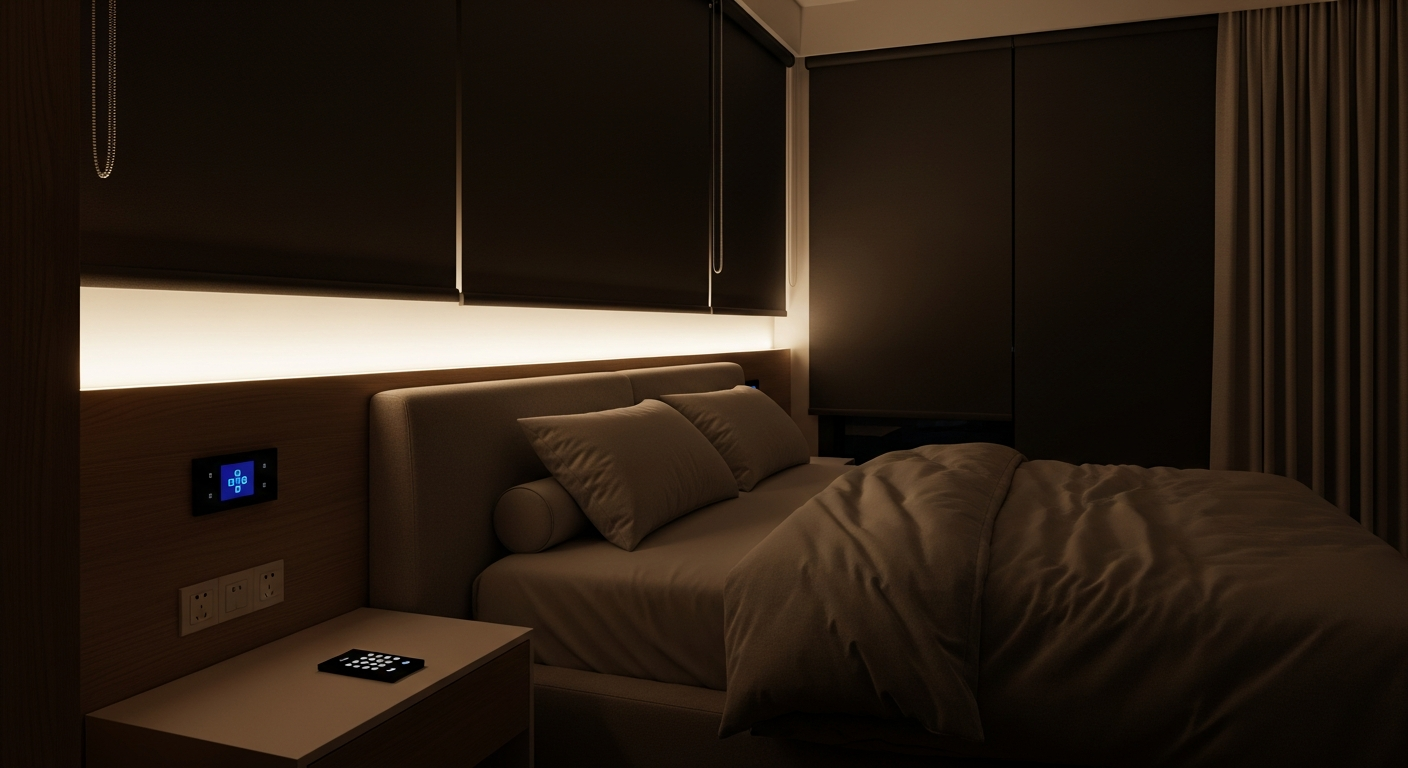
In media rooms, simpler treatment - area rugs, upholstered furniture, window treatments - goes a long way. Motorised blackout shades serve double duty, controlling both light and acoustic reflections.
If you're building or renovating, this is the stage to address acoustics. Retrofitting acoustic treatment after the fact is far more expensive and disruptive.
Control and Integration: Tie It All Together
A home theatre with five remotes is a frustration, not an experience. We integrate all theatre systems — display, audio, lighting, shading - into a single Control4 ecosystem that runs from your smartphone, a dedicated remote, or a wall panel.
As a Control4 Diamond Dealer, we design automation that works the way you think. One tap starts your movie: lights dim, shades close, display powers on, audio calibrates to the right setting. When the film ends, everything resets.
We're also certified with Lutron and Crestron, which means lighting and shade control inside your theater operate at the same level of precision as the AV systems themselves.
For clients who prefer hands-free control, we integrate Josh.ai voice control — a privacy-focused, natural language system built specifically for smart homes.
Seating: Don't Underestimate It
Seating affects viewing angle, comfort, and — more than people realise — acoustics. A room filled with upholstered seating absorbs far more sound energy than a room with hard chairs.
In dedicated theatres, we plan seating layouts based on screen size, throw distance, and the number of viewers. Tiered risers are common in larger rooms and ensure clear sightlines for every seat.
In media rooms, the priority is flexibility. Sectional sofas, modular pieces, and swivel chairs all have a place depending on how the room gets used.
We coordinate with interior designers and builders regularly — seating, cabinetry, and AV systems need to be planned together, not independently.
Lighting: The Overlooked Performance Factor
Theatre lighting does two things: it controls ambient light for picture quality, and it sets the mood for the experience.
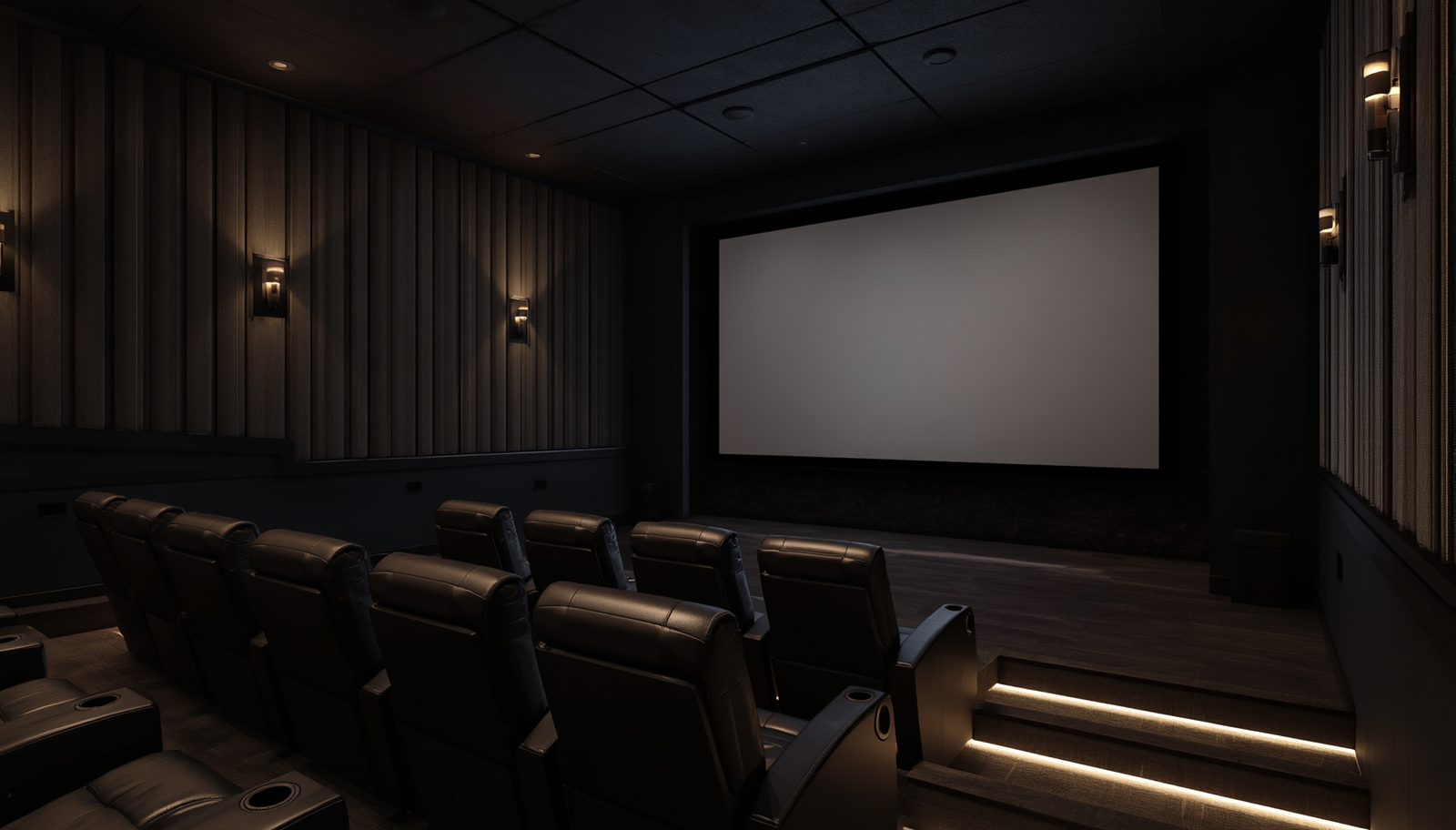
Architectural LED lighting inside a theatre is designed around zones. House lights for entry and exit, aisle lighting for safety, bias lighting behind the screen to reduce eye strain, and sconce or step lighting that adds atmosphere without washing out the picture.
Lutron lighting systems - which we design and install - allow every light in the theatre to be dimmed, colored, and controlled through your automation system. Scene presets handle the transitions automatically.
On the light control side, motorised blackout shades are essential for projector rooms. We install Lutron motorised shading systems that are quiet, precise, and fully integrated with the rest of your Control4 ecosystem.
Budget: What Does a Home Theatre Actually Cost?
This is the question most people hesitate to ask. We'd rather answer it directly.
Entry-level media room setups - a quality large-format TV, a 5.1 surround system, basic lighting control — typically start around $10,000–$20,000 installed.
Mid-range dedicated theatres - 4K projection, 7.1.4 Atmos audio, acoustic treatment, Control4 automation, Lutron lighting and shading — range from $40,000–$100,000 depending on room size and finish level.
High-end custom installations — 8K projection, full Dolby Atmos configurations, custom acoustic design, tiered seating, Josh.ai voice control, and complete smart home integration — run well into six figures.
The biggest driver of cost isn't the gear itself. It's the quality of the design, the integration complexity, and the craftsmanship of the installation. We do all low-voltage work in-house, which gives us direct control over quality at every step.
Why Professional Installation Matters
Gear alone doesn't build a home theatre. Design, calibration, and integration determine whether a $50,000 system performs like a $50,000 system or a $15,000 one.
We've been called in to replace DIY installations where the gear was right but the execution was wrong — uncalibrated projectors, poorly placed speakers, automation that didn't work reliably. Starting over is always more expensive than doing it right the first time.
Our team holds certifications from Control4, Lutron, Crestron, Sonos, Sony, and Josh.ai. We bring factory-trained expertise to every project, and we back every installation with 24/7 support.
Ready to Build Your Home Theatre in Naples?
Whether you're starting with a blank room or upgrading an existing setup, we're here to help. Quantum AV serves Naples and all of Southwest Florida, and we bring the same level of care to every project — from compact media rooms to full luxury cinema installations.